Chicken Coops and runs
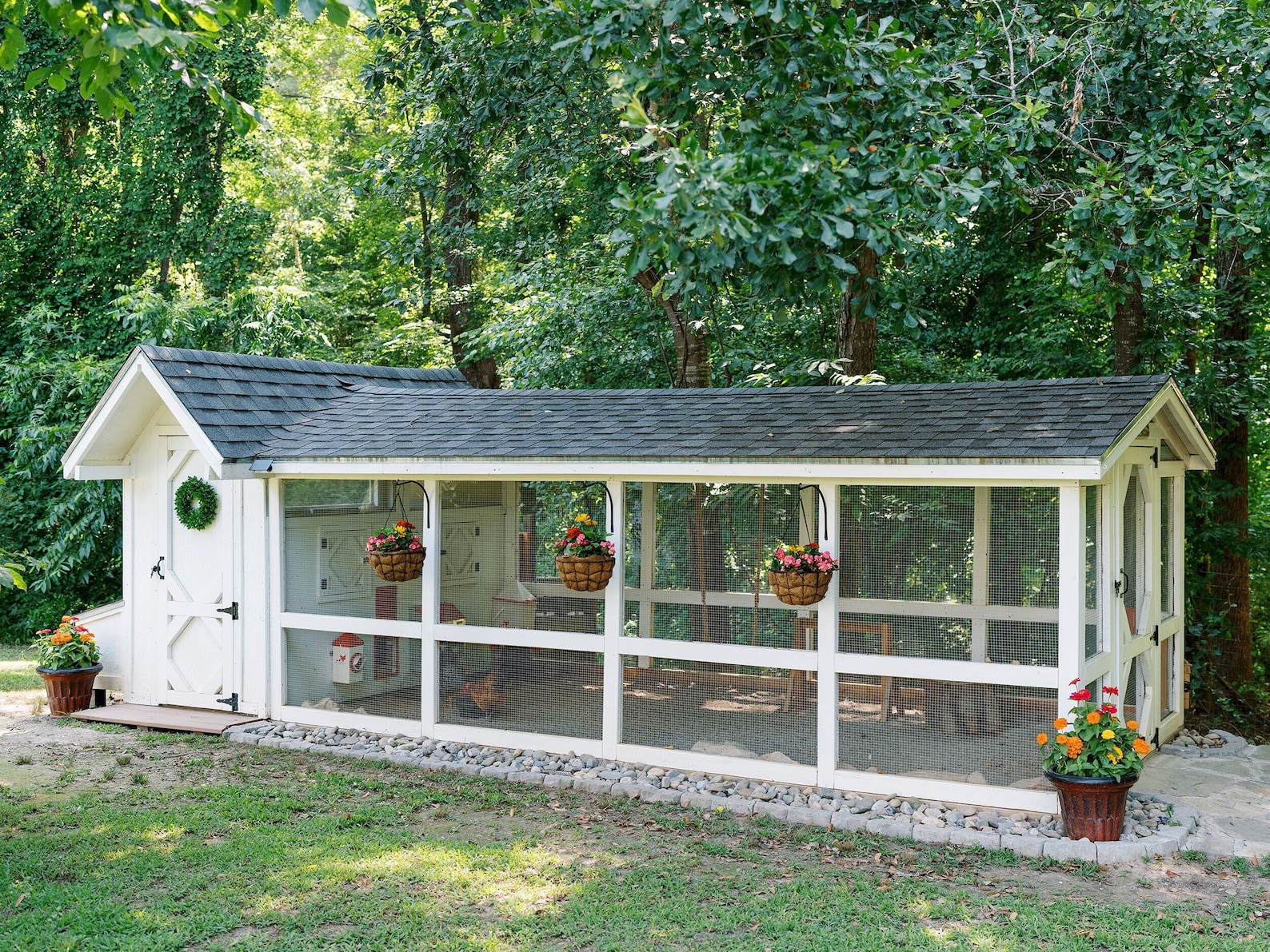
Once your chickens have all their feathers, they can move into their permanent home. How much space do they really need? Can you build their coop from scratch or would you rather purchase it? Another important consideration is how many chickens you have. A general rule of thumb for chicken coops is 4 square feet of space per standard bird. If you want more luxurious space or heavier birds, 8 square feet per bird is recommended.
If you have a large flock, a good idea is a coop and run similar to what is pictured. Some people offer this built and there is the option you can build it yourself for a cheaper price. If you have less of a need for something this luxurious, smaller coops and runs are available for purchase for more budget friendly price ranges. Of course, building something smaller is also an easier concept.
Some basic saftey concerns for all chickens exist because predators exist and different climates have cause for concern depending on the time of year. If the chickens do not free range, a fenced run should be set up. Hardware cloth is recommended for protection from predators such as hawks, oppossums, raccoons, coyotes, skunks, foxes and weasels.
A helpful hint for figuring out what type of fence or barrier to use, is that chicken wire keeps chickens in, hardware cloth keeps predators out! Hardware cloth is pictured on this run for an idea.
In addition to their chicken coop, where they rest at night, many people opt for a chicken run. This is where chickens can safely roam without fear of predators through the day. It is accessible from their run and will have their feed and water and more roosting bars. The possibilities are endless and this is often dependent on your time and money that you are willing to invest. You can opt for just chicken wire and tarps or you can get really fancy and purchase a metal or wooden run, have roofing and a way to protect against the elements.
The climate can often dictate what habitat you decide to go with. If you live in warmer regions, the summer is often tough and you will want to provide lots of shade and water. Some people go for fans as well although chickens do not expel heat the same as humans so this may make us feel better, but often find that chickens standing in cold water usually works just fine.
In colder regions, in the winter, the cause for concern has largely been "how do I keep their water from freezing?" There are many options and many opinionated chicken owners. Many people love heated dog bowls, many people love heated waterers, but if you have no electricity running to your chickens, how do you remedy that? One solution may be to keep water in rubber dishes and just break the ice daily. Solar panels that give electricity are also an option as well and that is becoming quite popular. All chicken owners seem to agree that wrapping the run is an important way to keep them out of the elements. Wrapping the run can be done securing either soft or hard plastic to their run, depending on how their run is set up. If you have a set up similar to what is pictured, the option of hard plastic secured to the hardware cloth or finding soft plastic, similar to a clear shower curtain or tarp. As long as it keeps the chicken out of the wind and rain, whatever you decide will help them immensely through the winter.
An important thing to remember is that chickens are outside creatures. They can withstand single digits and and negative temperatures. Their body heat stays above 100 and it's comparable to them always wearing a down jacket. Long time chicken tenders will swear that as long as you keep them out of the wind, they will be just fine and live to see next spring. There are many breeds that fare well in the winter months and as long as you keep them dry on their wattles and combs, they hopefully will not face frostbite. Many owners argue for keeping the chickens comfortable and if you can provide them with supplemental heat (not abrasive heat because - shock)